
Bank of Canada Interest Rate Announcement
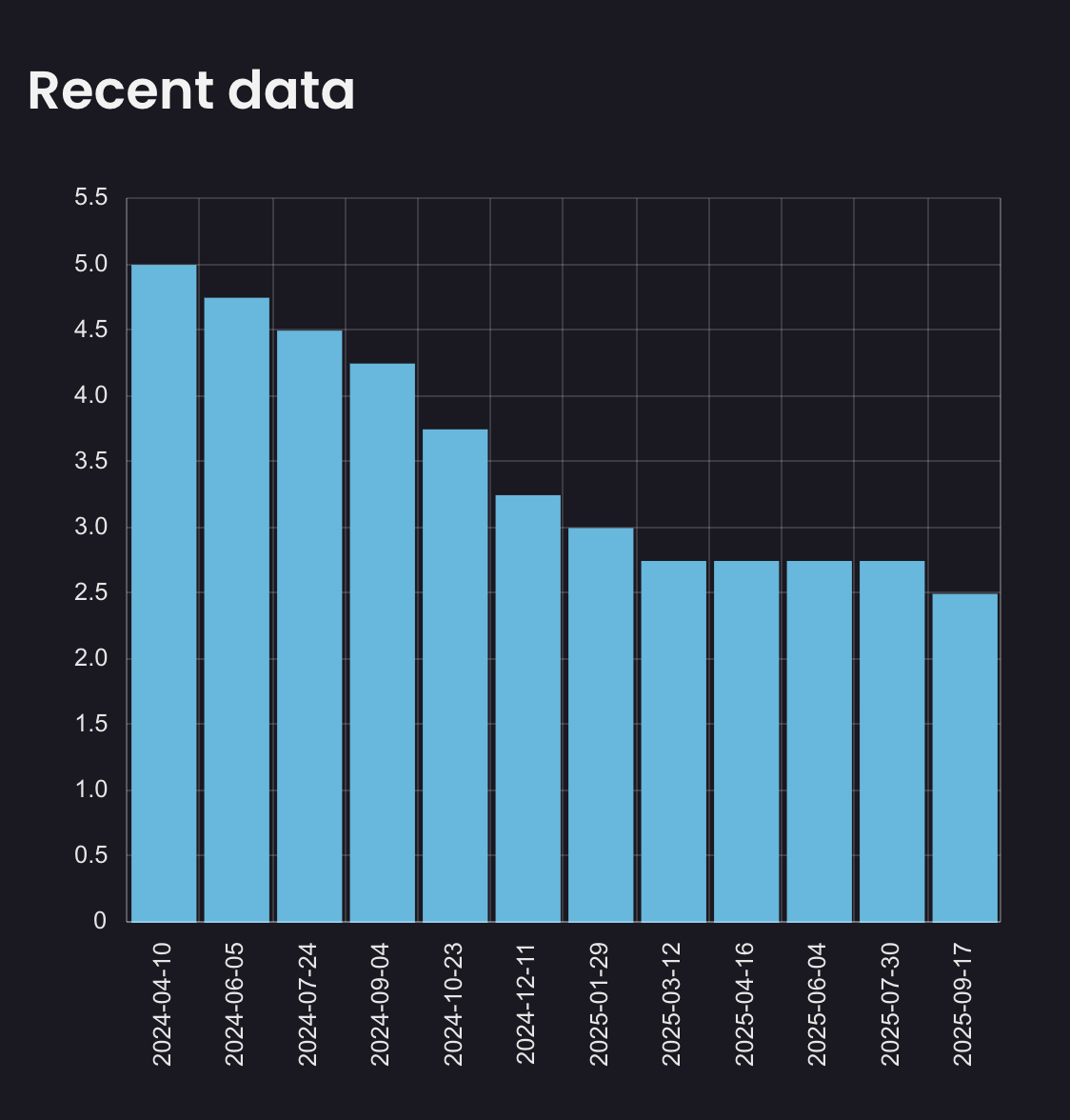
The Bank of Canada lowered its overnight policy rate to 2.5 per cent this morning. In its statement, the Bank noted that US tariffs sharply impacted Canadian export levels while also hindering business investment. In spite of resilient consumer spending, GDP declined by about 1.5% in the second quarter, aligning with the Bank's most recent projection. In addition, the Canadian labour market has cooled further through the summer, with the national unemployment rate reaching 7.1 per cent, its highest level since May 2016, excluding the pandemic. Regarding inflation, the Bank noted that the upward pressure on month-over-month core inflation growth is dissipating, which, coupled with the de-escalatory behaviour from our government, reduces the overall inflationary risks associated with trade policy moving forward.
Taken together, the Bank of Canada signalled a tangible shift in policy rate considerations, emphasizing weak economic growth in conjunction with stabilized inflation as a backdrop to lower rates. However, the Bank expressed continued caution and vigilance regarding its outlook due to the lingering uncertainties associated with US tariffs and their risks to Canada's export potential. Financial markets are now shifting attention towards what the Bank will do before the end of the year, with many economists believing that tempered inflation and prolonged weakness in the economy will result in an additional 25-point cut, bringing the policy rate to 2.25% by year-end. These expectations are reflected in 5-year bond yields, which have stabilized around 2.71%, down about 0.4 points from their summer peak. This broader trend will place downward pressure on 5-year fixed mortgage rates, which we hope stimulates stronger sales activity to close out a weak year in the housing market overall.
Categories
Recent Posts

Canadian Retail Sales Increase 0.8% in September 2026: What Does Consumer Spending Tell Us About British Columbia's Economy?

Canadian Housing Starts Fall 2.2% in October 2026: How Is British Columbia's Residential Construction Market Performing?

Canadian Inflation Holds Steady at 3.1% in October 2026: What It Means for British Columbia's Housing Market

BC Real Estate Market Update: Sales Activity Remains Divergent Across the Province

BC Housing Market Forecast: Home Sales Expected to Rebound in 2027 Despite Economic Challenges

Canada’s Labour Market Weakens as October Job Losses Raise Questions About Further Rate Hikes

Victoria Real Estate Market Update – October 2026: A Balanced Market Offers Buyers More Choice

BC Economic Growth Remains Above 2% in August 2026

Canadian Economic Growth Stalls in August as September GDP Declines
Bank of Canada Raises Interest Rates to 2.5%: What It Means for the Canadian Real Estate Market
CONTACT FLORENCIO BELOW TO GET MORE INFO: